Materials
Custom furniture or ready-made? A guide to help you decide
· 2 min read · SG Concept Architecture
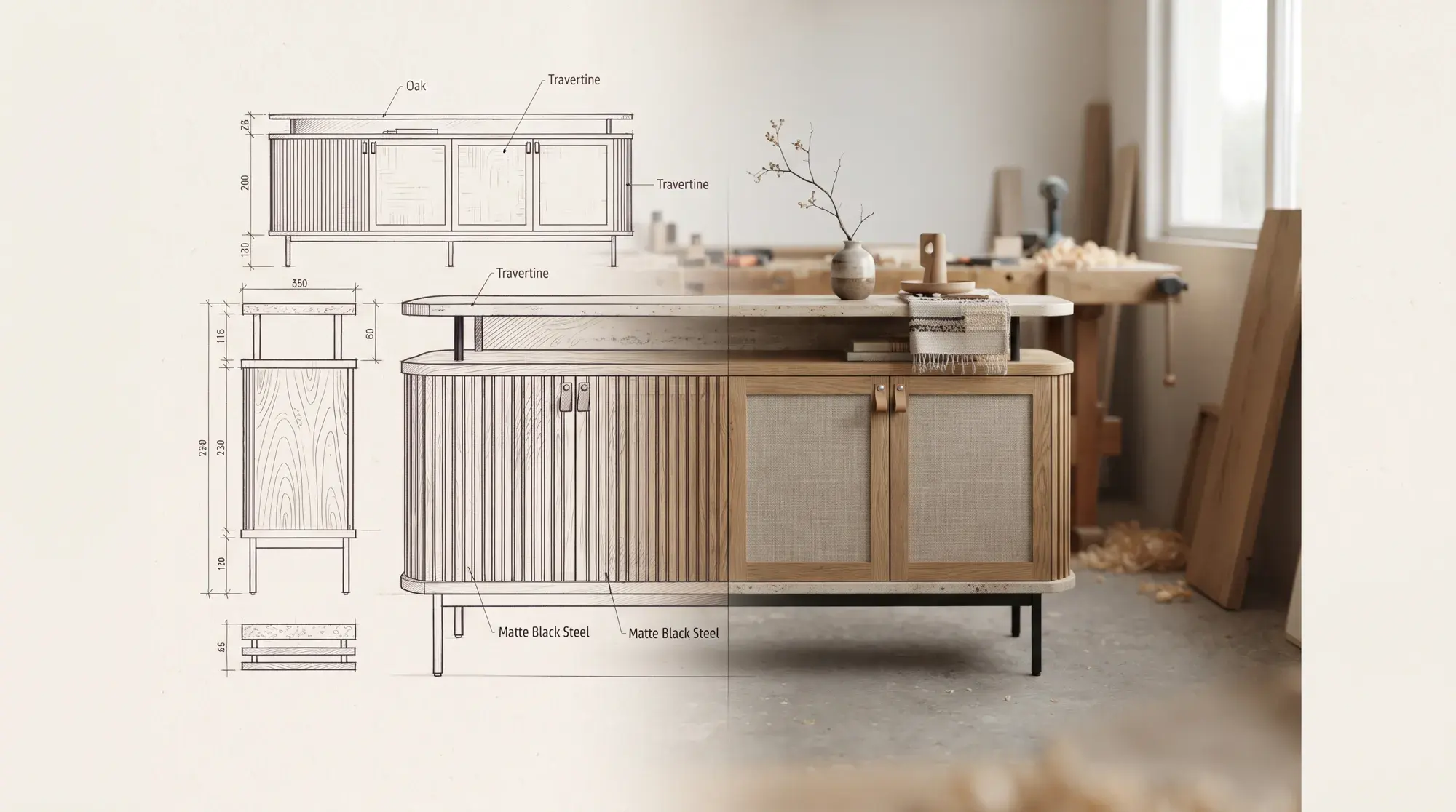
Custom furniture makes sense in spaces with non-standard dimensions, in built-in wardrobes and niches, in places like kitchens and bathrooms where every centimetre counts, and for signature pieces that carry the character of a space. For pieces like sofas, chairs and beds, whose ergonomics have been developed over years, a good ready-made product is often the better choice. The best result comes from combining the two deliberately.
When does custom furniture make a difference?
- In spaces with sloping ceilings, column projections or non-standard wall dimensions
- In pieces that merge with the wall, such as built-in wardrobes, bookcases and TV units
- In places where storage is critical, such as kitchens, bathrooms and dressing rooms
- In pieces that must match the space's material language (stone, wood, metal) exactly
- In signature pieces of commercial spaces, such as reception desks and display units
Where is ready-made furniture enough?
Seating comfort, foam density and back angle are more reliable in products tested over many years. For sofas, chairs, beds and light fittings, choosing a good designer product is usually wiser than making one from scratch. What matters is that the ready-made pieces speak the same language as the custom ones.
How does custom production work?
The process moves through measurement, concept, 3D image, fabrication details, sample approval, production and installation. The Chamber of Architects of Türkiye specification defines a separate "fabrication details" stage for parts made in a workshop or factory and brought to site (Chamber of Architects, 2011). Door joints, hinge and runner types, veneer direction and edge details are settled in these drawings. Every detail that is not drawn is left to the maker's assumptions.
What to look for when choosing materials
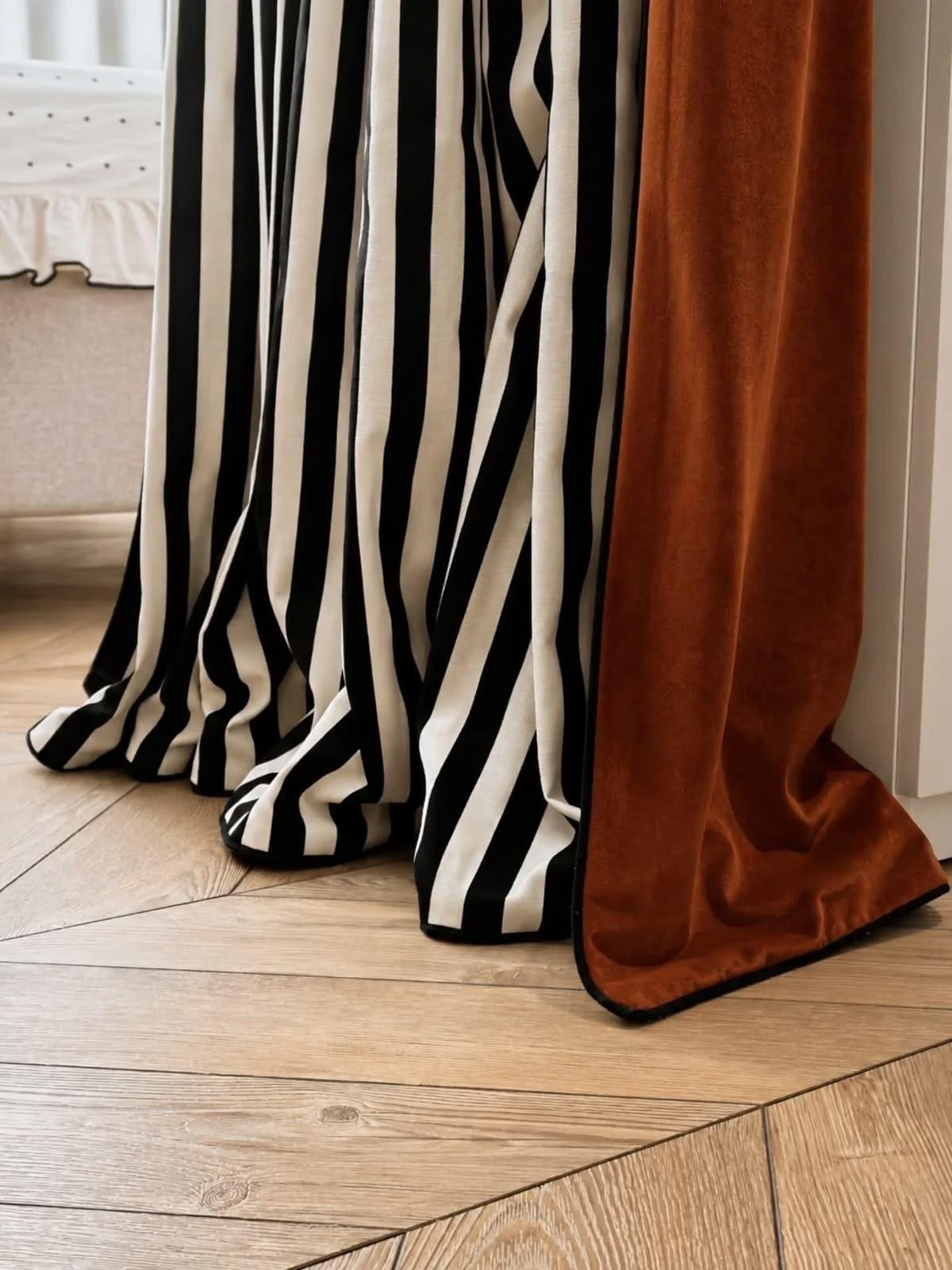
Solid wood, veneer, lacquer and laminate meet different budgets and uses. Moisture resistance matters in kitchens and bathrooms, scratch resistance in homes with children, and heavy use in commercial spaces. Hardware (hinges, runners, handles) directly determines a piece's lifespan; saving money here usually costs more.
“Custom furniture copies not the dimensions of a space, but the habits of the people who live in it.”
Conclusion
The right question is not "custom or ready-made?" but "which piece custom, which ready-made?". In our custom furniture design service we design made-to-measure pieces, follow their production and bring them together with ready-made pieces in one language.
Frequently asked questions
Is custom furniture more expensive than ready-made?
It depends on the piece. For pieces that merge with the wall, such as built-in wardrobes and kitchens, custom production often makes more sense because it uses space more efficiently.
Do I need an interior designer for custom furniture?
On a multi-piece project, yes. Drawing the dimension, material, joint and hardware decisions prevents production errors.
From the Journal
All articles →- Materials
· 3 min read
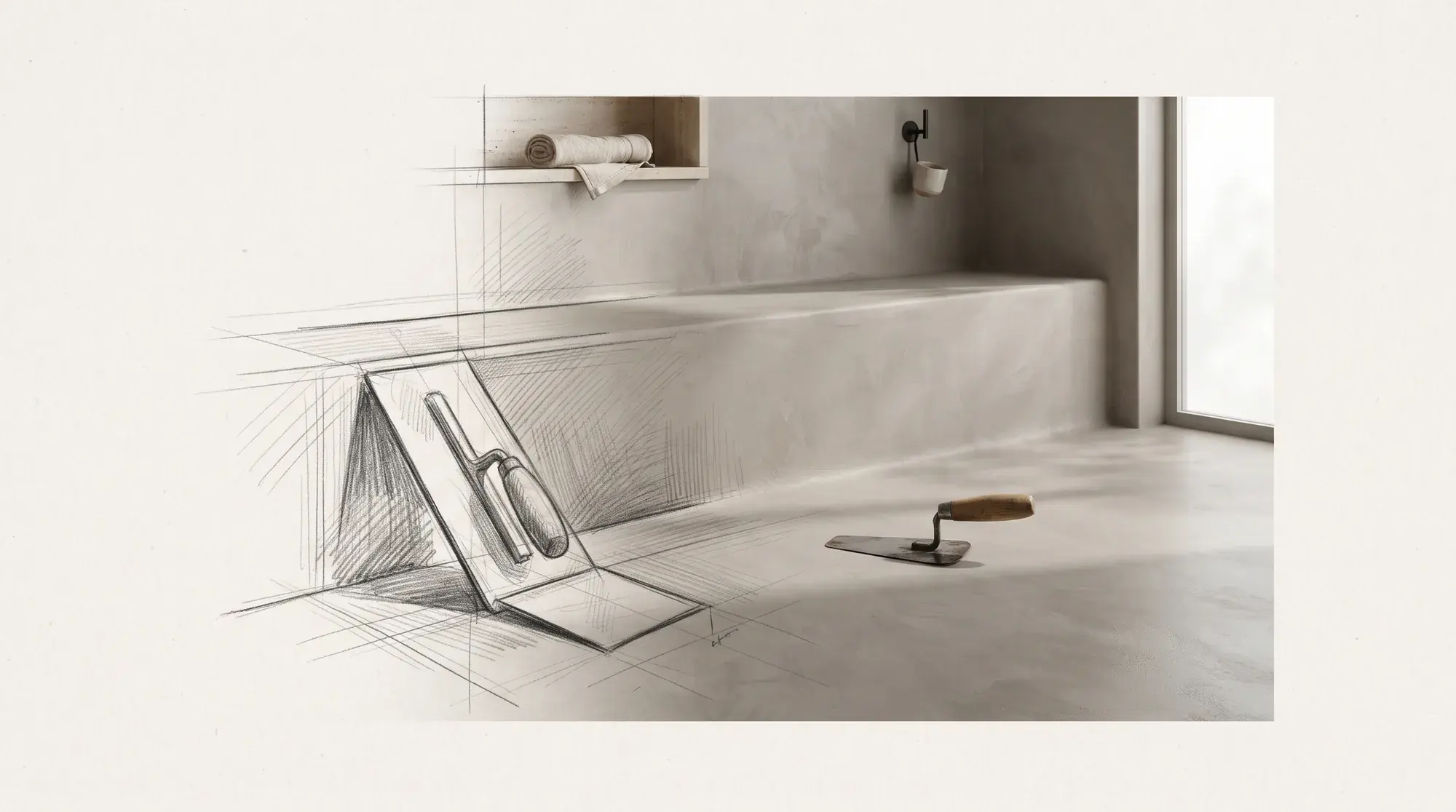
What is microcement? Pros, cons and where to use it
Microcement is the material behind seamless floors and one-piece bathrooms. How it is applied, where it works and what to watch out for.
- Materials
· 3 min read
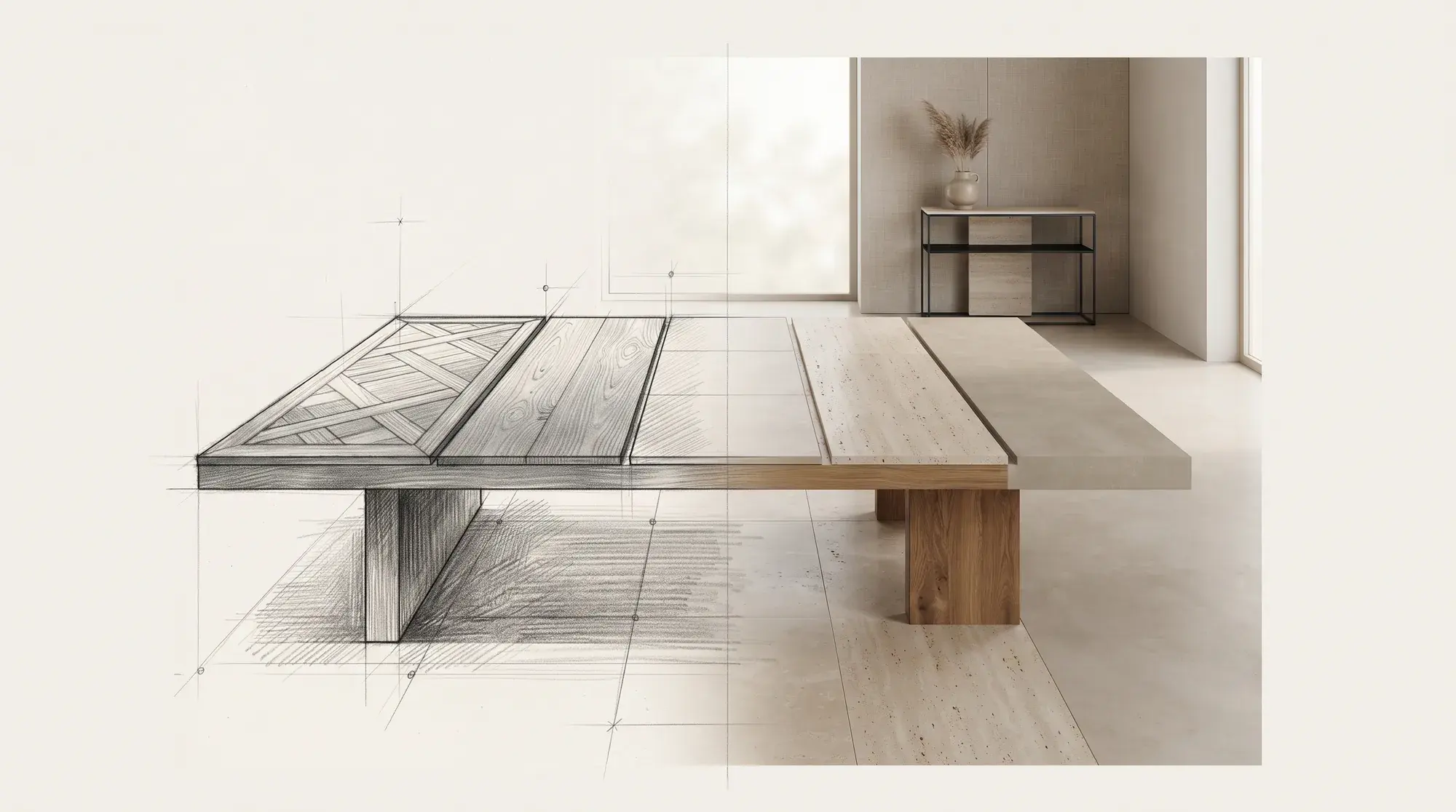
Choosing flooring: solid wood, engineered wood, SPC, tiles and microcement
Which floor suits which room? We compare floor finishes for durability, water resistance, sound, underfloor heating and look.
- Materials
· 3 min read
How to choose a wall colour: an interior paint guide
Light, orientation, materials and use: how to choose the right wall colour, sheen levels, low-VOC paints and why testing matters.