Guide
Bathroom renovation guide: the right order, from waterproofing to fixtures
· 3 min read · SG Concept Architecture
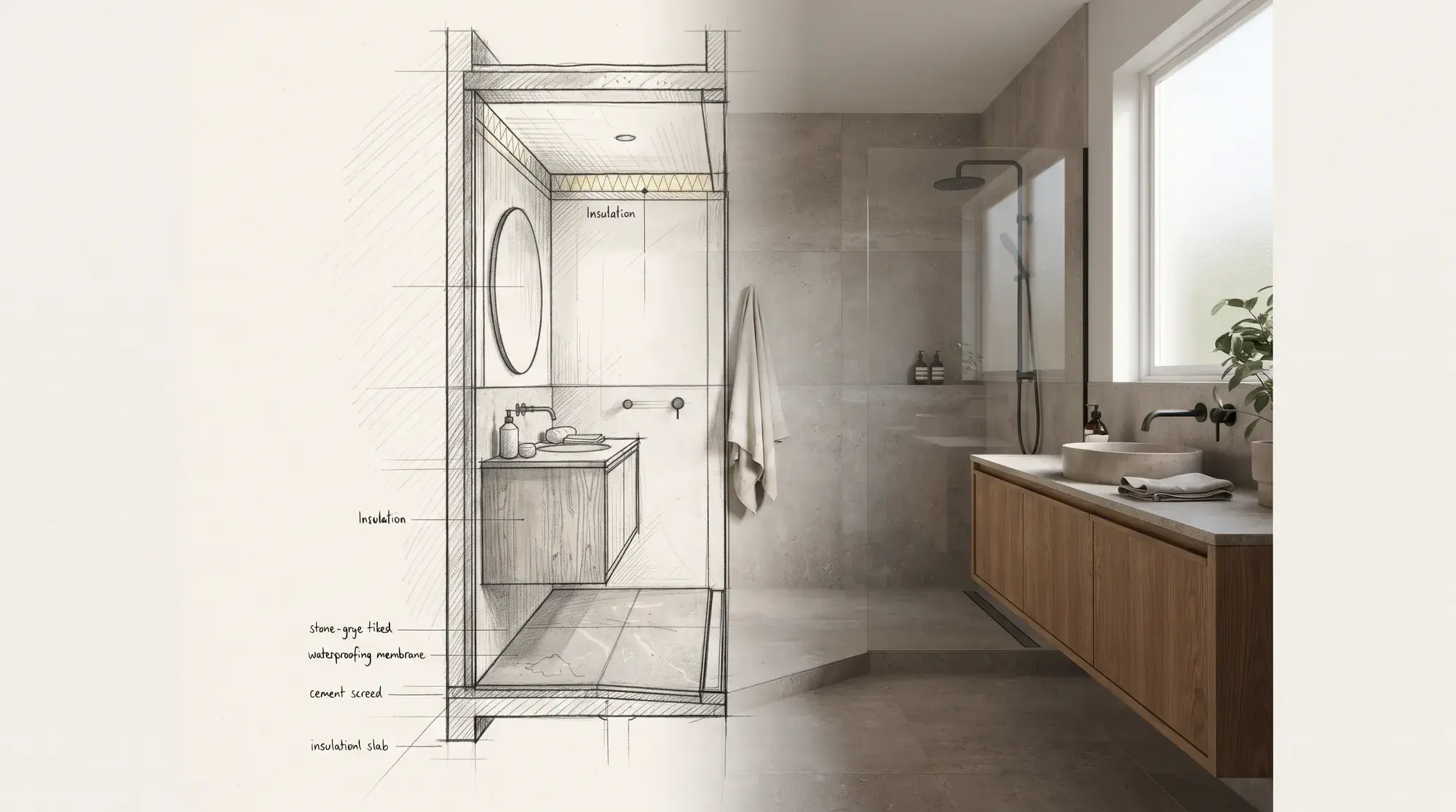
A bathroom renovation moves through stripping old finishes, renewing water and drainage pipes, waterproofing and floor falls, then finishes such as tiles, natural stone or microcement, and finally fixtures, vanity unit and accessories. Breaking this order leads to the most expensive mistakes: a leak hidden under a beautiful finish can mean redoing the whole job.
Where does a bathroom renovation start?
With the plan, not with choosing materials. Shower enclosure or bath? Single or double basin? Wall-hung or floor-standing toilet? If you want a concealed cistern and in-wall mixers, this must be decided at strip-out, because it sets the pipework that goes inside the wall. Calling in builders before the plan is clear means making decisions on site.
Why is waterproofing so important?
In a bathroom some water always seeps in through the grout and corners. The waterproofing layer under the finish is the last barrier that stops it. It should be applied across the whole floor, up to the ceiling on shower walls, and with waterproofing tape at all corners and pipe penetrations. A water retention test after waterproofing, before tiling, prevents future surprises.
- Give the floor an even fall towards the drain; standing water means mould in grout and silicone.
- In the shower, a linear (channel) drain is a cleaner solution for a level-access shower floor.
- Reinforce pipe penetrations and corners with waterproofing tape.
- Test the waterproofing by holding water for a while before tiling.
Ventilation: the real cure for mould
Mechanical ventilation (an extractor fan) is essential in windowless bathrooms, and even with a window it matters to remove moisture quickly after a shower. The EPA notes that the key to preventing mould is moisture control, and that wet materials and areas should be dried within 24-48 hours (U.S. EPA). A fan with a timer or humidity sensor solves this without relying on the user.
Which finish should you choose?
- Ceramic and porcelain tiles: durable, easy to maintain, wide choice. Large-format tiles reduce the number of grout lines.
- Natural stone: warm and timeless; but because it is porous it needs sealing and the right cleaning. Details in our natural stone guide.
- Microcement: seamless, one-piece look; needs skilled application and the right sealer system. See our microcement article.
Does choosing water-saving fixtures make a difference?
It does. According to the EPA, showering makes up about 17% of indoor water use in an average household; WaterSense labelled showerheads use at most 2 gallons (about 7.6 litres) per minute, and an average family can save about 2,700 gallons (about 10,000 litres) a year (U.S. EPA). For basin mixers, a flow of 1.5 gallons per minute can reduce water use by 30% or more compared with standard flow (U.S. EPA). Less hot water means less energy.
Storage and lighting in the bathroom
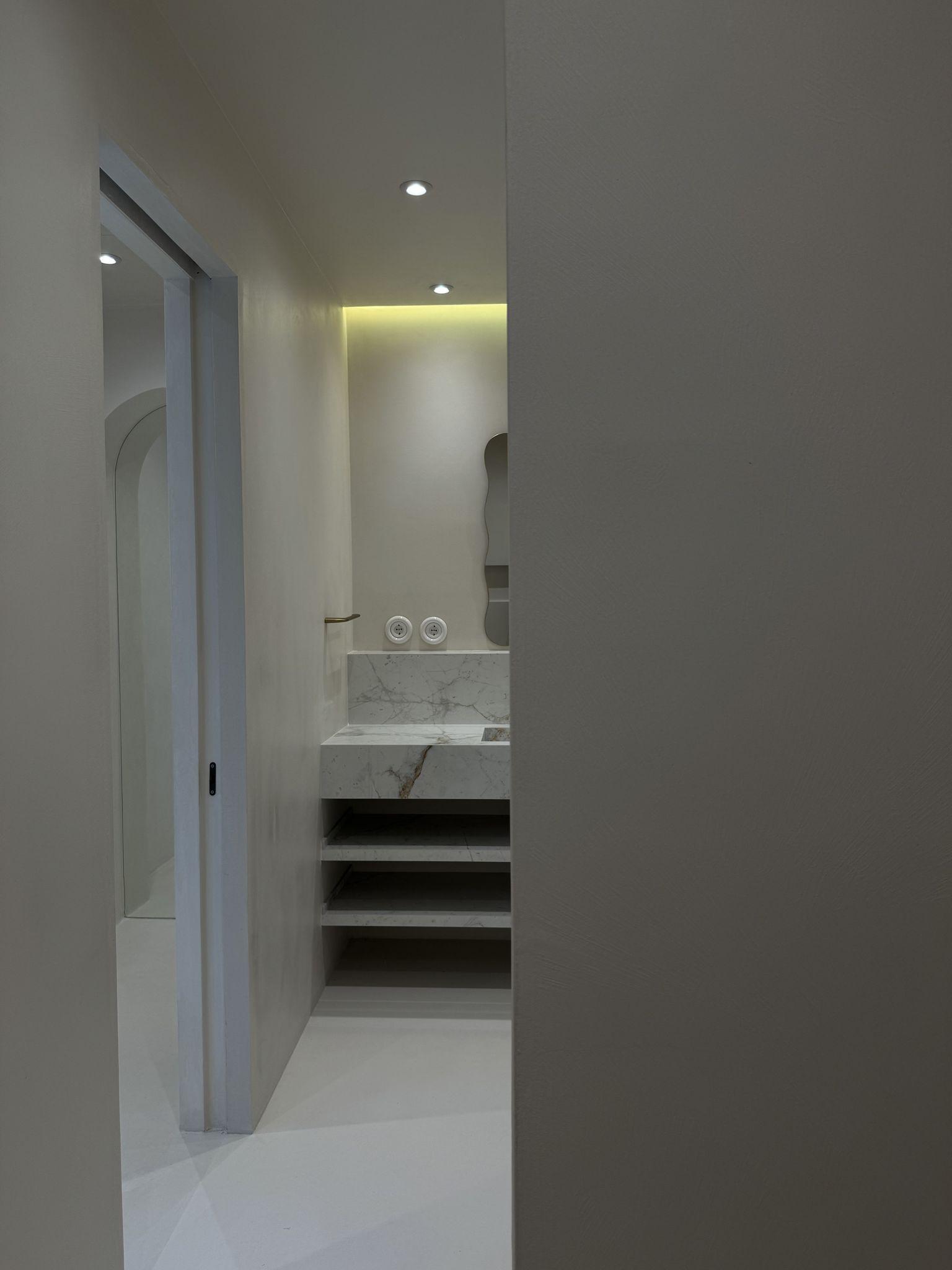
Mirror cabinets, in-wall niches and wall-hung vanity units make a small bathroom feel larger. For lighting, plan face lighting on both sides of or behind the mirror as well as ceiling light; light from above alone casts shadows on the face. Make sure wet-area fittings have a suitable protection rating (IP rating). For layered light, see our lighting guide.
“The most important layer of a good bathroom is the one you will never see.”
Conclusion
A bathroom is small, but it is the most technical room, where plumbing, waterproofing, electrics and finishes meet in the same square metres. When the plan, waterproofing and ventilation are right, choosing finishes and fixtures becomes a pleasure. We run bathroom renovations in Göktürk, Kemerburgaz and across Istanbul from design to handover through our build and renovation service.
Frequently asked questions
Is waterproofing essential in a bathroom renovation?
Yes. However good the finish, water seeps through grout and corners. The floor and shower walls should be waterproofed and tested before tiling.
Can new tiles be laid over old tiles?
Technically it is possible in some cases, but you cannot see the condition of the plumbing and waterproofing, and the floor level rises. In an old bathroom, stripping out and renewing the waterproofing is usually sounder.
How do you prevent mould in a windowless bathroom?
With mechanical ventilation (an extractor fan). A fan with a timer or humidity sensor removes moisture automatically after a shower.
How much water does a water-saving showerhead use?
EPA WaterSense labelled showerheads use at most 2 gallons, about 7.6 litres, per minute.
From the Journal
All articles →- Guide
· 3 min read
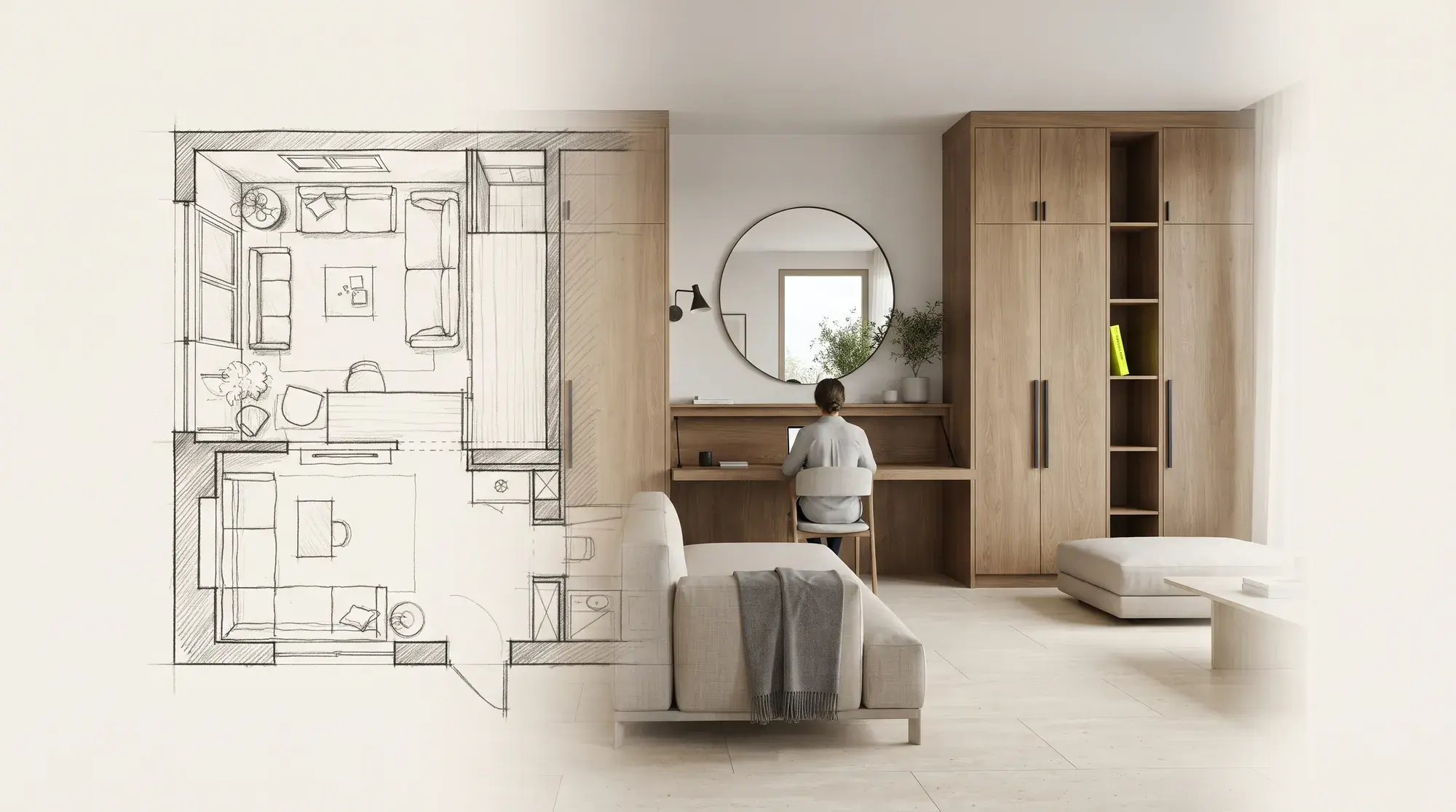
Small apartment interior design: 9 ways to make a small space feel larger
In one- and two-bedroom apartments you cannot add square metres, but you can enlarge the perception of space. Layout, storage, colour, light and multi-purpose furniture.
- Guide
· 3 min read
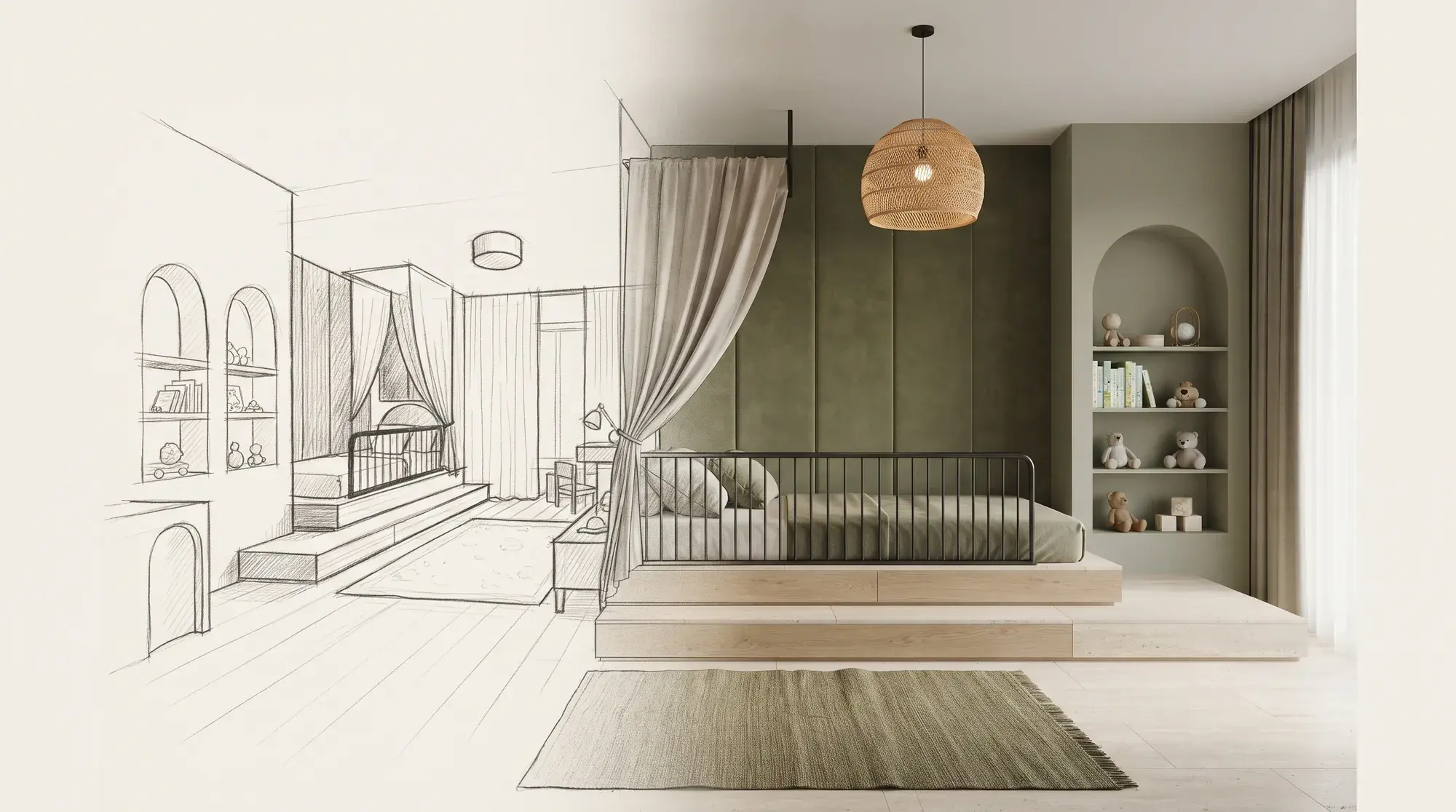
Children's room design: a safe room that grows with the child
Needs that change from infancy to the teenage years, safety, storage, colour and light: how to plan a children's room that will not date in a few years.
- Guide

· 3 min read
Bedroom and walk-in wardrobe design: a calm main suite
Bed placement, light and blackout, acoustics, wardrobe layout and the link to the en-suite: the principles of a bedroom designed for rest.