Trends
Quiet luxury: what it means in interior design
· 2 min read · SG Concept Architecture
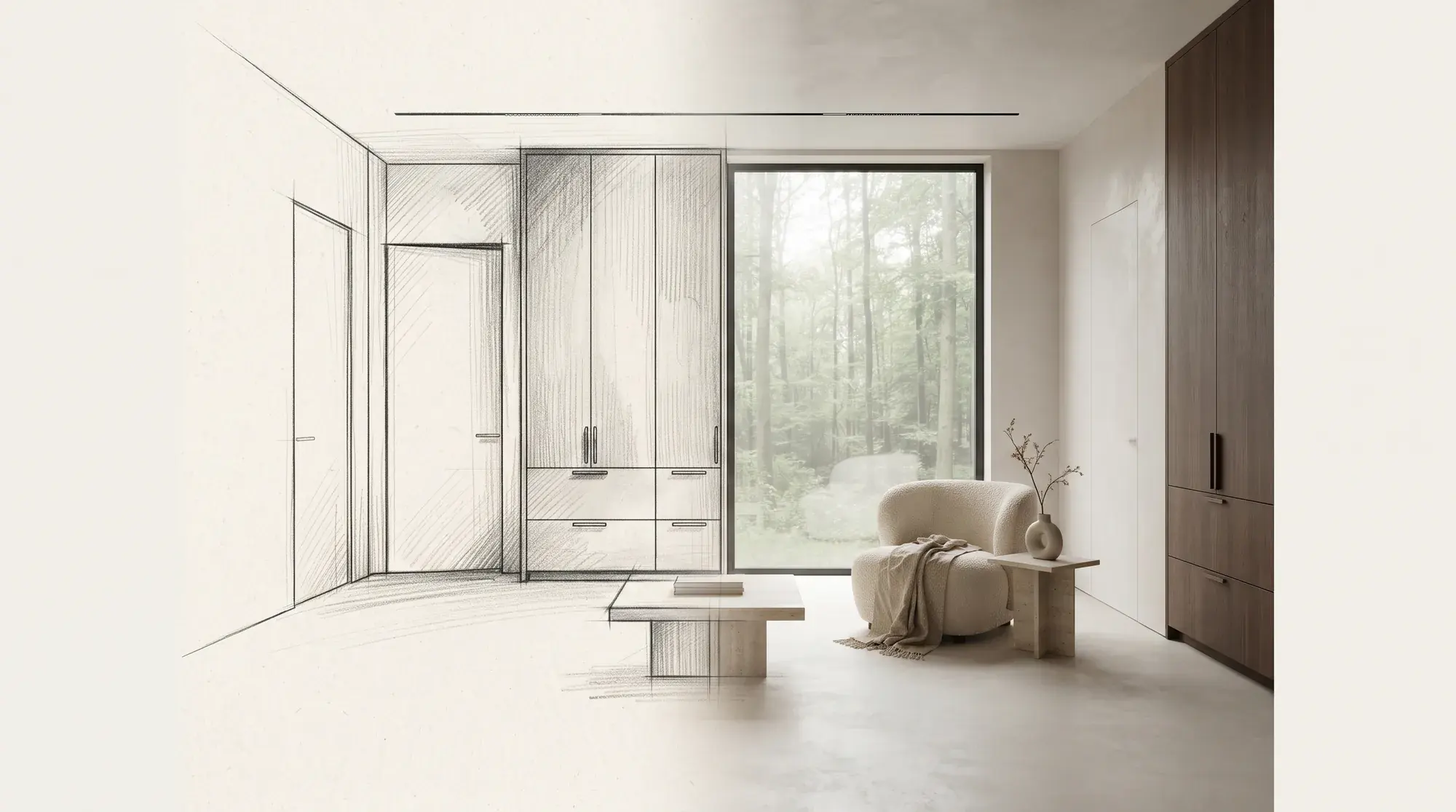
Quiet luxury is an interior design approach that expresses luxury not through brands, shine and ornament, but through the quality of materials, the care of craftsmanship and the unity of details. These spaces look simple at first glance; their real value shows as you live in them, touch them and look at the details.
Signs of quiet luxury
- A calm, warm palette: off-white, sand, coffee, caramel, dark chocolate.
- Textured natural materials: wood, stone, linen, wool, velvet, leather.
- Invisible details: concealed doors, seamless surfaces, recessed lighting, handleless doors.
- Few but good pieces: custom-designed or craft-made furniture.
- Scale and proportion: everything to the measure of the space, neither too little nor too much.
An example: CB House
CB House at Privé Kemer in Göktürk is an apartment renovation we designed with a "Quiet Luxury × Minimalism" concept. The first thing you notice in this home is what you cannot see: no skirting boards, door frames, parquet or tiles. We created continuous surfaces with microcement on floors and in wet areas and Italian paint on walls and ceilings, and supported this language with concealed doors that merge with the walls, softened corners and custom niches.
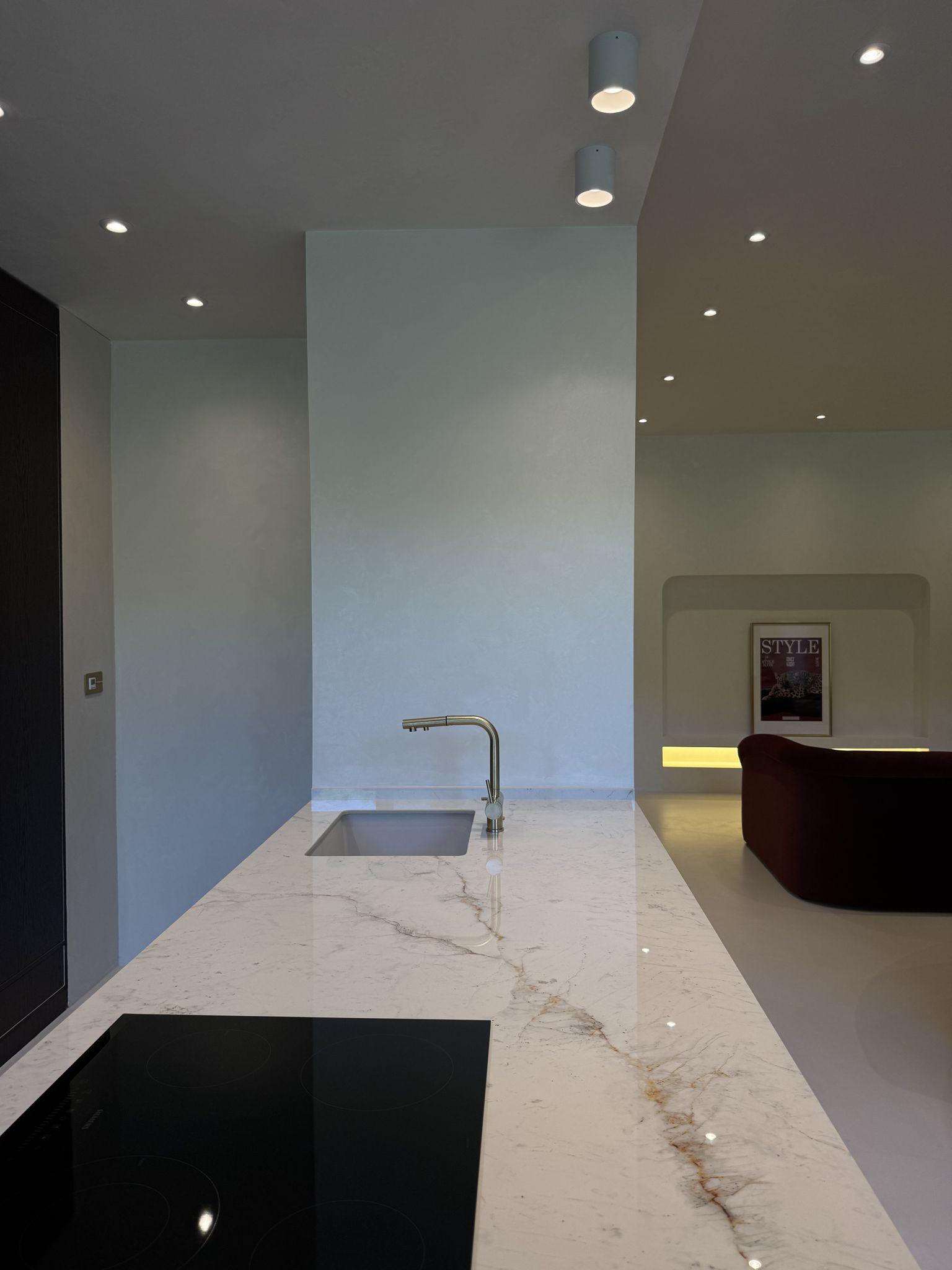
For the furniture we chose RAL 8017 Chocolate Brown over natural oak veneer, combining a clean look with function through sliding systems instead of conventional doors. The sofas, the banquette in the dining area, the lighting, and the switch and socket sets were also custom designed and made as part of the same design language.
How do you build quiet luxury?
- Take away first: as ornament, profiles, unnecessary trims and the number of colours decrease, the material speaks.
- Make surfaces continuous: the fewer breaks in floor and wall, the calmer the space reads.
- Invest in detail: small parts such as doors, handles, switches and skirtings define the whole.
- Hide the light: let its effect show, not its source. See our lighting guide.
- Give warmth with texture: a single-colour space stays alive with different textures.
Is quiet luxury expensive?
It demands craftsmanship and planning more than materials. Seamless surfaces, concealed doors and recessed details do not forgive mistakes, so the construction drawings and site supervision must be meticulous. On the other hand, it means fewer things, fewer accessories and longer-lasting decisions. We explain the cost items in our turnkey renovation article.
“Fewer details. More unity. A stronger character.”
Conclusion
Quiet luxury is less a passing trend than a timeless design attitude. Having design and build in the same team ensures that its details are not lost on site. See our interior design and custom furniture services.
Frequently asked questions
Which colours make up quiet luxury?
Calm, warm tones such as off-white, sand, beige, caramel, coffee and dark chocolate. Few colours, many textures.
Are quiet luxury and minimalism the same thing?
They are close but not the same. Minimalism aims for less; quiet luxury combines less with high-quality materials, warm texture and flawless detail.
Can quiet luxury be applied to an existing home?
Yes. Reducing the number of colours, adding quality textiles and natural materials, and softening the lighting already make a big difference. Details such as seamless surfaces and concealed doors require a renovation.
From the Journal
All articles →- Trends
· 2 min read
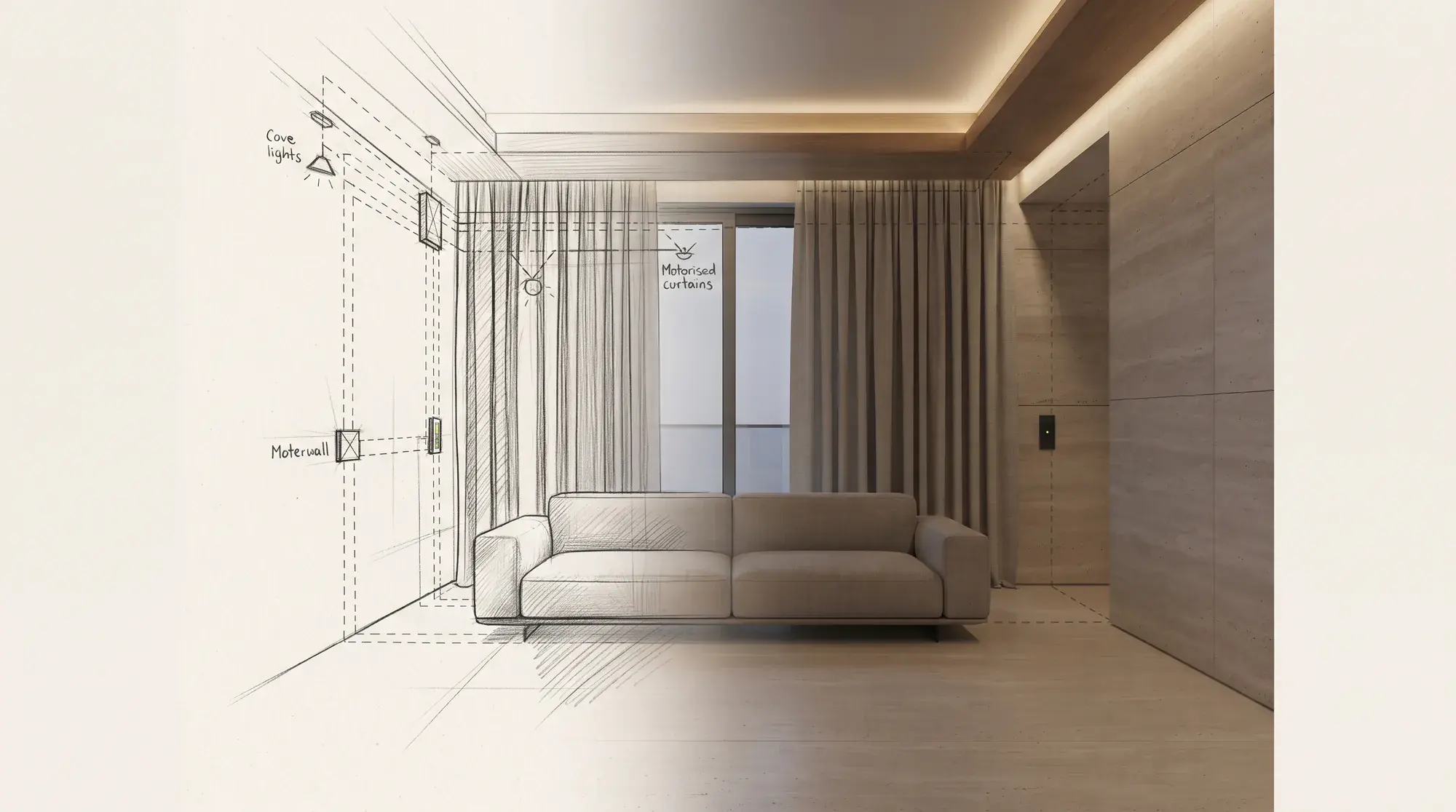
Smart home systems: how to plan them in a renovation or new build
Lighting scenes, motorised curtains, climate control, security and audio: treating the smart home not as devices added later but as infrastructure built in from the start.
- Trends
· 2 min read
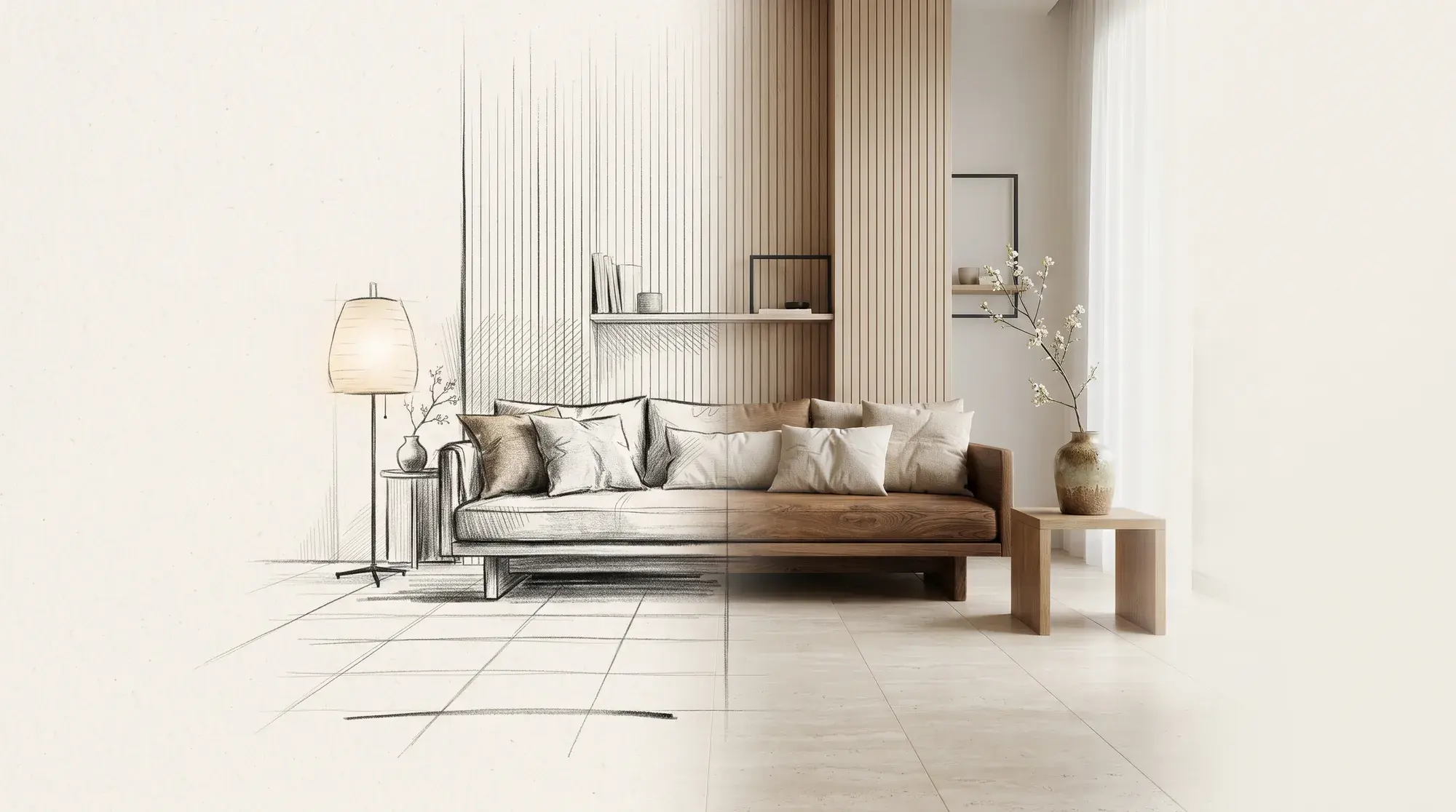
What is Japandi style, and how do you apply it to an interior?
The colours, materials and furniture of Japandi, where Japanese simplicity meets Scandinavian warmth, and the most common mistakes.
- Trends
· 2 min read
Interior design trends 2026: warm colours, local materials and craftsmanship
Cold minimalism is giving way to characterful, warm and personal spaces. The leading interior design trends of 2026 and how to adapt them to your home.